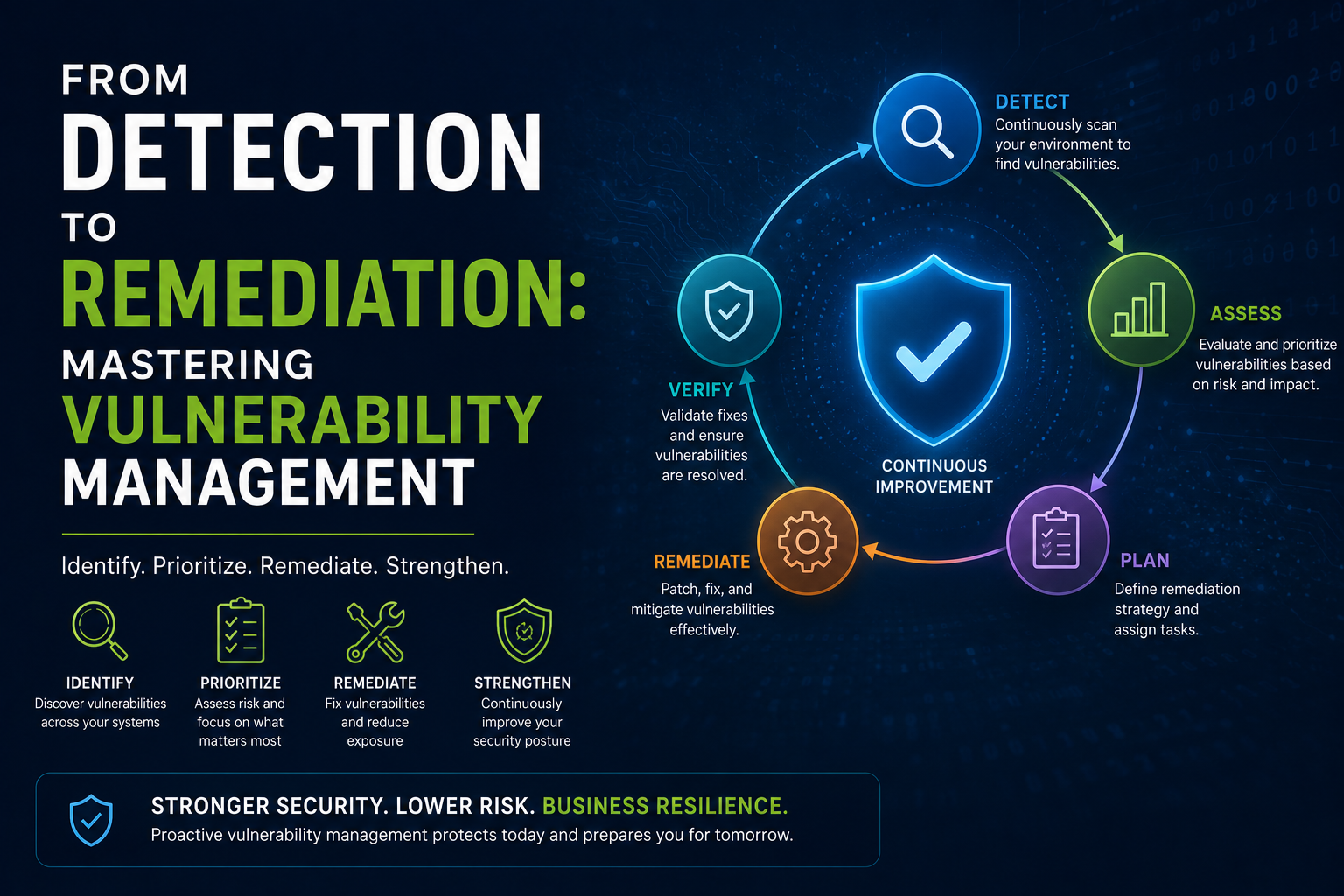
Implementing a suite of security tools throughout the development lifecycle is just the beginning. Without a structured process for managing the results, teams can quickly become overwhelmed by a flood of alerts, leading to “alert fatigue.” Effective vulnerability management isn’t just about finding flaws; it’s about prioritizing and fixing them based on the actual risk they pose to the business.
A critical flaw in many programs is relying exclusively on technical severity scores such as the Common Vulnerability Scoring System (CVSS) . A vulnerability with a high CVSS in a non-critical internal system may represent a much lower business risk than a medium-severity flaw in a public-facing payment application. A mature prioritization model should therefore translate technical severity into tangible business risk.
Strategic vulnerability management at TIVIT must transcend isolated technical analysis to adopt a prioritization model based on business risk. This methodology integrates Technical Severity (CVSS) as a normative basis, Threat Intelligence, focusing on databases such as the CISA KEV catalog to identify active exploits in the real world, and, fundamentally, Business Context, which calibrates the response according to the criticality of the asset, its exposure to the network, and the regulatory impact on sensitive data.
Since vulnerabilities are prioritized based on business risk, clear expectations for remediation must be established. This is achieved through service level agreements (SLAs) for remediation, which define the maximum allowed time to fix a vulnerability based on its risk level.
Cybersecurity governance establishes strict, criticality-based remediation windows, ensuring that critical risk vulnerabilities are mitigated within 7 days, while high-impact threats must be resolved within 30 days. For moderate and low risks, the timeline extends to 90 and 180 days, respectively. This creates a clear accountability framework and ensures that the most significant threats are addressed promptly.
To manage this process at DevSecOps speed, automation is essential. The ideal workflow involves integrating security scanning tools directly with issue tracking systems like Jira or TIVIT Sensr.
Incident response automation at TIVIT integrates intelligence and agility into the workflow, ensuring that, when faced with a new vulnerability, the system autonomously executes the hybrid risk model for immediate prioritization. Once the risk exceeds the established security thresholds, the platform automatically generates and routes a ticket to the responsible development team, providing a complete package of technical context that includes the precise location of the flaw and actionable guidelines for rapid remediation.
This automation transforms security findings from static reports into actionable tasks, incorporating remediation directly into developers’ existing workflows and dramatically accelerating time to remediation.
