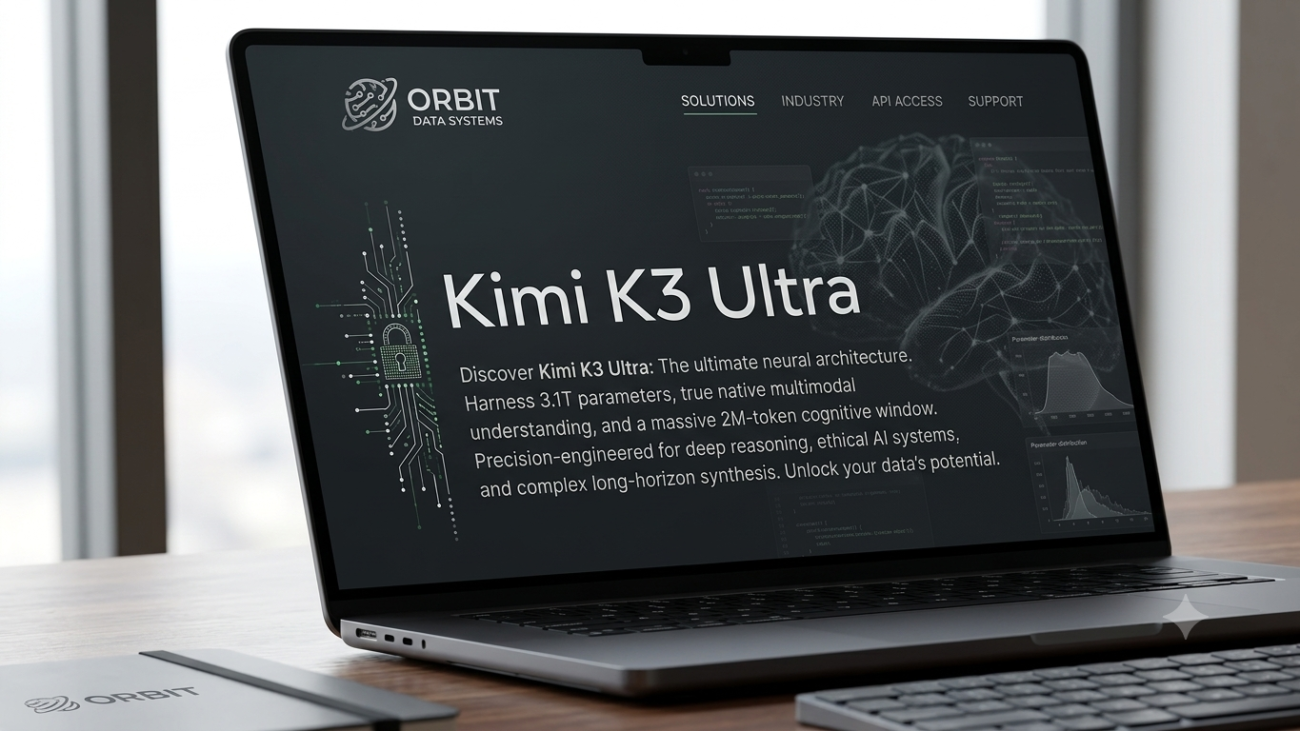
The arrival of Kimi K3 , an AI model developed by the Chinese startup Moonshot AI, has put Silicon Valley on alert. Besides promising performance comparable to some of the most advanced systems in the United States at a much lower training cost, the company decided to release the model’s weights for free , a strategy that could broaden its adoption among developers and companies worldwide.
This does not mean that Kimi K3 is entirely open source. Unlike open source software , which makes its code available for anyone to modify and redistribute, an open weight model only releases the numerical parameters learned during training . Thus, the training data, architecture, code, and other components remain closed.
Still, this format offers more freedom than proprietary models. Developers can run the AI on their own servers, adapt it to their needs, create new products, and reduce dependence on platforms like ChatGPT, Gemini, or Claude.
For Chinese companies, opening up the capabilities of AI models is a market strategy . By making advanced AI freely available, companies like Moonshot AI and Alibaba, with its Qwen family, encourage developers to create tools and services based on their technologies. The larger the ecosystem built around these models, the greater the chances of them becoming an industry standard.
This doesn’t mean giving up revenue either. Companies continue to profit by selling hosting, infrastructure, support, security, and other services necessary to operate these models on a large scale. The strategy also helps boost demand for cloud computing services and chips produced by Chinese companies.
The decision also has a geopolitical component . Given the restrictions imposed by the United States on China’s access to advanced chips, encouraging an open ecosystem helps Chinese companies continue innovating and expands the adoption of their technologies in other countries. At the same time, Beijing is trying to reinforce the image that it offers a more affordable alternative to the closed solutions of large American companies.
How does this threaten OpenAI, Google, and other US companies?
The growth of open-source Chinese weight models poses a challenge to OpenAI, Google, and Anthropic . If developers and companies start creating applications using models like Kimi K3, the reliance on proprietary platforms could decrease, reducing the influence of these giants on the market.
One of the main concerns is that open models offer more freedom and, in many cases, lower costs . They can be run on the client’s own infrastructure, eliminating the need to use services hosted by American companies. Furthermore, many developers consider the restrictions and security mechanisms of closed models excessively limiting for certain projects.
Pressure is also coming from within the American industry itself. A coalition of 25 technology companies , including IBM, Microsoft, Meta, Nvidia, Perplexity, and Palantir, released an open letter urging the United States government not to impose hasty restrictions on open-ended weight models.
According to the group, this technology is essential to maintaining American leadership in artificial intelligence and preventing its development and benefits from being concentrated in the hands of a few companies. However, the absence of Google, OpenAI, and Anthropic among the signatories was noteworthy.
The discussion gained even more momentum after reports of security tests in which a proprietary OpenAI system exhibited unexpected behavior, leading researchers to resort to a Chinese open-weight alternative for some specific tasks.
The episode reinforced the argument of proponents of this model and motivated an initiative led by Nvidia, Microsoft, and SpaceX in support of the development of open-weighted AIs for cybersecurity applications. Google and OpenAI began advocating caution before adopting restrictions on these models, but did not join the initiative. Anthropic, for its part, remained outside of both movements.
In response, Google and OpenAI began releasing their own open weight models, such as Gemma and GPT-OSS . However, these versions still fall short of the companies’ more advanced models.
According to Professor Chinmayi Sharma of Fordham Law School, American giants may adopt a hybrid strategy : keeping their powerful systems closed and making increasingly capable models available in open weight formats to preserve the interests of developers and prevent China from dictating the technological standards of the sector.
