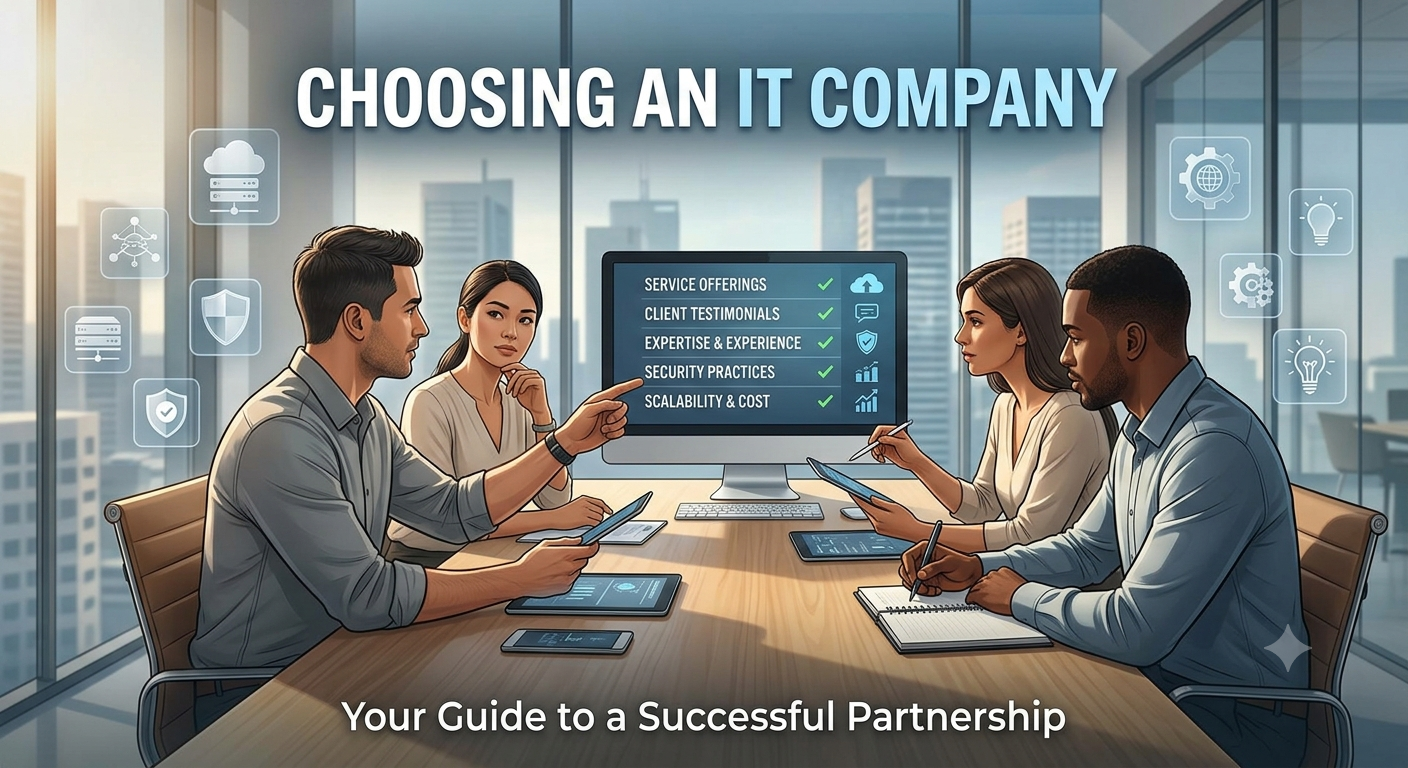
What truly differentiates a trustworthy IT company?
Choosing an IT company isn’t just about hiring someone to “solve support tickets.” For business leaders, the right decision impacts availability, security, productivity, and operational costs. The wrong decision, on the other hand, quickly becomes apparent: system downtime, exposed data, slow service, rework, and direct losses to the bottom line.
That’s why the choice needs to go beyond technical jargon. A reliable IT company isn’t the one that speaks the most complicated terms or promises everything. It’s the one that can maintain stable operations, reduce risks, and act before failures turn into crises. That’s the central point of Azaz Informática : technology needs to function as a foundation for growth, not as a constant source of problems.
For business owners and managers, the main criterion should be simple: does this company avoid problems or only react after they’ve already occurred? This difference completely changes the value delivered.
Why stability, security, and business continuity are worth more than technical promises.
Many vendors sell nice-sounding projects, tools, and terms. But in day-to-day operations, what really matters is stability. If the team can’t work because the network went down, the system became slow, the backup failed, or support takes hours to respond, then technology has ceased to be an asset and has become a risk.
A truly strategic IT company protects business continuity. This means fewer disruptions, less data loss, less internal pressure, and more predictability for operations. It also means less reliance on improvisation. When IT is well managed, managers can make decisions with more confidence because they know that systems, access, and information are under control.
In practice, stability and security are not abstract benefits. They represent cost reduction, preservation of the company’s image, and real productivity gains. And, for most decision-makers, this is worth far more than promises of “innovative” solutions that don’t hold up in everyday use.
How to evaluate experience, service, and failure prevention in practice.
Experience isn’t just market experience. It’s the ability to respond well to problems and, even better, to prevent them from happening. A company can have years of experience and still work reactively, constantly putting out fires. Another can be more organized, closer to the customer, and more proactive, delivering much more value with less stress.
When evaluating an IT company, observe how it behaves in the face of risk, urgency, and routine. Does it anticipate problems? Does it explain things clearly? Does it take responsibility? How the company handles these points says much more than a sales presentation.
Signs that the company is acting reactively or strategically.
A reactive company only shows up when a problem explodes. Customer service begins after the pain, not before. Responses come when there’s time, not when operations demand them. And, frequently, the focus is on resolving the symptom, not the cause.
A strategic approach, however, involves a different behavior. The team monitors, guides, reviews processes, suggests improvements, and warns about risks before the impact becomes apparent. This reduces recurring failures and avoids that tiresome cycle of “fix it today, break it again tomorrow.”
Companies that act proactively also help build internal maturity. They don’t depend on urgent requests to work well. On the contrary, they structure IT so that the client experiences less disruption and has more control. For those leading an operation, this is an important sign of reliability.
How to identify agility, commitment, and close monitoring.
Agility isn’t just about responding quickly. It’s about understanding quickly, prioritizing correctly, and resolving issues consistently. Agile and efficient service is usually accompanied by clear communication, a responsible attitude, and genuine follow-up until the problem is resolved.
In testimonials and reviews of Azaz Informática, these are precisely the signs that appear: agile service, total commitment to the solution, a team attentive to the client’s needs, and a long-term relationship based on trust. Phrases like “Problem solved 100%” and “A company you can always count on” show something valuable: the client perceives not only technical expertise, but also presence.
This matters because managers don’t want an IT company that disappears after the contract ends. They want a partner that follows up, guides, and responds when needed. And, in environments where any downtime affects revenue and productivity, this close relationship is invaluable.
The technical and operational criteria that prevent losses and downtime.
When choosing an IT company, technical criteria need to move beyond generic rhetoric and become part of the company’s daily operations. Security, backup, availability, support, and management are not just decorative items. They are elements that protect revenue, time, and reputation.
A good choice should consider the direct impact of IT on the business. What happens if there is a network failure? What if a user loses access to a critical system? What if an important file disappears? What if an attack compromises strategic data? The IT company needs to be prepared to respond to these situations methodically, not haphazardly.
Data security, backup, and protection against ransomware.
Today, data protection is not a luxury. It’s a basic necessity. If a company depends on information to sell, serve, issue invoices, operate, or make decisions, losing data means losing continuity. And, in many cases, losing money.
Therefore, when analyzing an IT company, it’s worth understanding how it handles backups, access policies, credential protection, and incident recovery. Security needs to be thought of as a system, not as a patch. This includes preventing data hijacking, controlling permissions, and implementing processes that reduce the risk of human error.
The advantage of proactive action is clear: it protects the company before a crisis. Instead of scrambling to recover from losses afterward, the business gains resilience. And resilience, in the corporate world, means less disruption, less exposure, and a greater ability to continue operating even under pressure.
Availability, fast support, and the ability to minimize disruptions.
Few things irritate a manager more than slow support. When a problem paralyzes operations, every minute counts. That’s why the availability of the IT team needs to be carefully analyzed.
A reliable IT company understands priorities. It knows how to differentiate between what can wait and what requires immediate action. It also maintains clear channels, provides objective answers, and follows up until resolution. This reduces the feeling of abandonment that many clients experience with slow and distant providers.
In practice, availability isn’t just about being “online.” It’s about having people prepared to act quickly and consistently. It’s about providing service with a focus on customer impact. It’s about preventing small failures from becoming major disruptions. For companies that depend on technology to sell and provide good service, this difference changes the month’s results.
Consulting, management, and automation to increase productivity.
Many people look for an IT company thinking only about support. But the best value usually comes from consulting and management. When the company helps structure processes, integrate systems, and automate tasks, the gain ceases to be merely corrective and becomes strategic.
Effective automation reduces rework, improves service speed, and frees up the team for more important tasks. IT management, in turn, organizes priorities, reduces waste, and improves the use of existing infrastructure. This directly contributes to reducing costs and increasing efficiency. For references on how to structure operations and grow predictably, check out Move at Pace .
This is one of the areas where Azaz Informática excels: technology is treated as the foundation for growth, stability, and continuity. It’s not just about “keeping everything running,” but about building a more productive and predictable environment. And, for managers, this type of vision makes a real difference in their daily work.
The role of proven trust in choosing an IT company.
Trust isn’t declared, it’s demonstrated. When an IT company talks about responsibility, commitment, and efficiency, the market needs to see concrete signs of it. Reviews, testimonials, and consistent client relationships are essential parts of this proof.
In the case of Azaz Informática, customer perception in Google reviews reinforces this image of trust. The brand is associated with attentive service, effective solutions, and close follow-up. The result is strong social proof, with 97.5% positive reviews and testimonials that reinforce the company’s credibility.
Reviews, testimonials, and long-term relationships as social proof.
Those who hire technology for their businesses need confidence in their decision. And nothing helps more than seeing other clients reporting consistent experiences over time. When testimonials show attention to needs, speed of service, and the ability to truly solve problems, it reduces purchase uncertainty.
More than praise, what matters is consistency. If several clients highlight the same points—agility, commitment, reliability, anticipation of problems—there is a clear sign of operational consistency. And consistency is exactly what is expected of an IT company that deals with continuity, data, and critical operations.
This type of social proof also says a lot about relationships. Companies that are strong in this aspect don’t just emerge during times of crisis. They build long-term bonds, maintain close dialogue, and create an experience where the customer feels they can always count on the team. This is just as valuable as the technical solution itself.
Also Read : How to Recover Company Data: What to Do When Your Company Loses Files
How to transform selection criteria into a safe decision for your company.
In practice, choosing an IT company requires comparing promises with performance. It’s not enough to ask what they do; you need to understand how they do it, how quickly they respond, and what types of risks they help mitigate. This analysis prevents expensive contracts, poor support, and decisions based solely on price.
The best approach is to focus on results. Does the company help prevent failures? Does it reduce internal costs? Does it guarantee availability? Does it deliver fast service? Does it protect data? If the answers to these questions are clear, the decision becomes much more secure.
Mental checklist for comparing suppliers and prioritizing what delivers results.
Instead of focusing on attractive presentations, assess whether the company demonstrates stability, security, and a proactive approach. See if they clearly communicate about backups, data protection, support, response time, and follow-up. Also, observe if customers praise the service and if testimonials show genuine trust.
Another important point is to see if the company understands your business’s pain points. If you depend on speed, does it know how to prioritize your needs? If the risk of data loss is high, does it take this seriously? If your operation requires close support, is it prepared to provide it?
This type of analysis helps avoid contracts that seem good at first but turn out to be expensive later. After all, the real cost of IT isn’t just in the monthly fee. It’s in the downtime, rework, and time lost with an infrastructure that doesn’t support the business.
When to request contact and move forward with a more preventative solution.
If your company is already experiencing slow performance, recurring failures, delays in service, or fear of data loss, the time to act is now. Waiting for the next outage only increases the risk. A preventative IT company comes in precisely to reduce this type of exposure.
This is where it makes sense to move towards a more objective conversation. Request contact when you realize you need more stability, lower repair costs, and a partner who truly monitors the operation. If availability, security, and trust are your priorities, it’s not worth delaying the decision.
